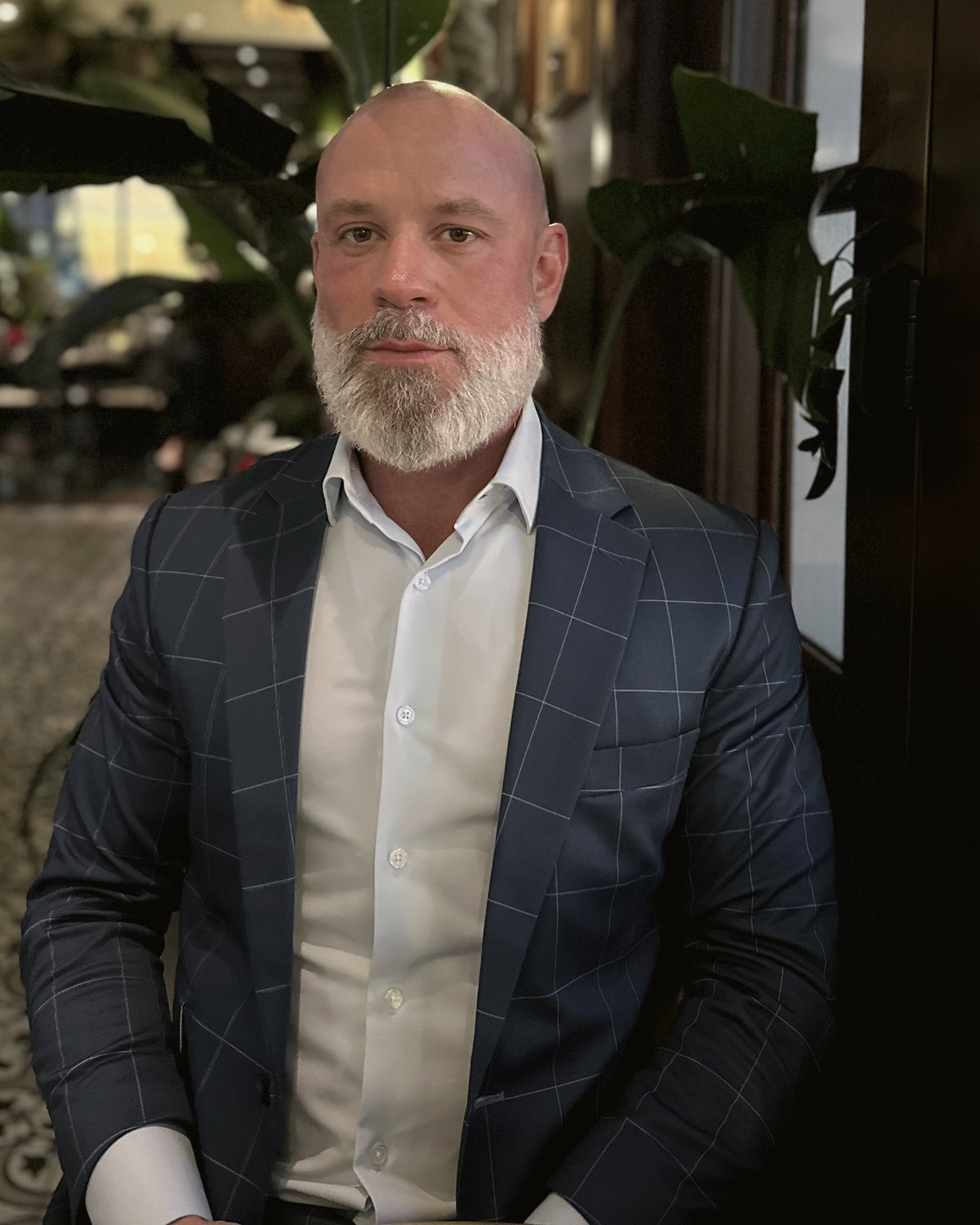
I was 41. Tired, soft around the middle despite training three days a week, not sleeping well. I asked my doctor for a testosterone panel. It came back at 385 ng/dL. I was told I was within range, and to come back if things got worse.
That wasn't wrong, and it wasn't a lie. It was the answer to a different question than the one I was asking. A doctor's job is to determine whether you have a disease. My question was whether 41 was supposed to feel like this.
What I did about it
I ordered my own panel. Then a DEXA scan, and another one a month later, and ten more after that. I started logging what I ate and what I lifted, and I kept doing it while traveling enough to hold airline status I'd rather not have earned.
The data piled up in four places that couldn't see each other. Bloodwork in a lab portal, scans in one app, training in another, food in a third. And when I started asking an AI agent to help me make sense of it, I found myself exporting spreadsheets and pasting them into a chat window so the thing would know what I actually weighed.
That's the whole origin story. I'm an engineer, it was a stupid way to live, and I built the system that fixed it.
Who I am
I'm a solutions consultant in enterprise financial technology. The first decade of my career I wrote code. The twelve years since, I've mapped complex systems and integrated platforms for banks and credit unions, mostly from an airport.
Before that I spent eleven years at a fintech, joining at around employee twenty and leaving as one of the four longest-tenured people out of about nine hundred and fifty. I wanted to quit roughly three hundred times. The first three or four years nearly broke me — hiring constantly into total chaos, customers stalling in implementation, a bug queue that never stopped.
I mention it for one reason: everything I'll tell you about your body comes down to doing an unglamorous thing for longer than is comfortable. I'd rather show you I've done that than assert it.
What I'm not
I'm not a physician. I don't interpret laboratory results, I don't diagnose, and I don't prescribe. Nothing I publish is medical advice.
The advisory works alongside your clinician, not instead of one. You keep the doctor you already have — I'm not asking you to switch, and I'm not bringing one of my own. What I do is put organized evidence in your hands, so the appointment you were going to anyway starts somewhere better than a vague complaint about being tired.
If you decide to pursue something your doctor won't prescribe, the clinician you choose for that is yours to choose. I take nothing from any of them — no referral fee, no revenue share, no arrangement of any kind with any laboratory or clinic. The lab guide says the same thing on its first page.
What I'm building
An instrument that holds every number about one man's body in one place, and an advisory for five men at a time on top of it.
Five, not fifty. I have a day job I'm good at and no interest in leaving, and a practice that only works if the person running it is actually reading the numbers every week. The cap is the quality control.
I publish the whole trend, including the scans that went the wrong way. If that's the kind of evidence you want from a man before you take him seriously, we'll probably get on.
James Miller · Dallas, Texas
LinkedIn · james@thebespokephysique.com